Successful African Beekeeping
  • Home/Beekeeping Step by Step
    • Why Promote African Beekeeping?
    • Types of Hives
    • Baiting & Placement
    • Maintaining Hives
    • Harvesting Honey
    • Processing Honey
    • Rendering Wax from Comb
    • Practical Tips
    • 6 Steps: Making Beeswax Starter Strips
    • 12 Steps: Honey From Hive to Table
  • Training
    • Trainees' Comments
    • Rulwa Valley 2021
    • Youth Training Seminar 2019
    • Iringa 2017 Nov-Dec
    • Rukwa Valley 2017 May
    • Kasulu 2016 Nov
    • Rukwa 2015 Nov
    • Songea/Korogwe May 2015
    • Ngarananyuki Dec 2013
    • Mahenge Dec 2013
    • Kijabe Kenya July 2013
  • Harvests
    • Rukwa Valley Harvest 2020
    • Rukwa Valley Harvest Report 2018
    • Rukwa Harvest May 2017
    • Kapenta Harvest May 2016
    • Kapenta Harvest May 2015
    • Kapenta Harvest May 2013
    • Lyanza Harvest Dec 2012
  • Photo Gallery
    • Training Photo Gallery
  • Blueprints
  • Links & Resources
  • Contact US
Picture
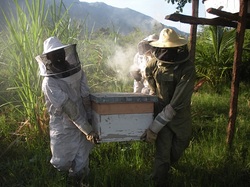
Only by hands-on, practical working with bees in their natural environment does one feel that they can truly succeed in keeping and caring for African bees. We invite and encourage seminar participants to be part of our harvests. There can be no better follow-up to theory training in our seminars than studying the inside of a colony of bees during the harvest. Different types of hives, brood chamber and the laying pattern of the queen, queen excluder and honey comb can all be looked at in detail. Those who have participated in this aspect of our training say it has been the most fundamental factor in their desire to keep African bees.


Powered by Create your own unique website with customizable templates.